


Pet Memorial Creation Guide for a Personal, Lasting Pet Tribute
Updated: 2 days ago
A pet’s absence is often felt in the smallest places: the quiet corner by the window, the familiar sound that no longer meets you at the door, the pause before reaching for a leash. A thoughtful Pet Memorial Creation Guide begins here, not with an object, but with the particular life you shared. The most moving memorials do not try to make grief disappear. They give love a place to rest, where companionship can remain visible, tender, and close.
Creating a tribute can feel difficult when emotions are fresh. You may have hundreds of photos but no idea which one matters most. You may know your pet deserved something beautiful, yet feel that a standard frame or generic keepsake cannot hold their personality. There is no correct timetable and no single right form. What matters is choosing details that feel unmistakably theirs.
Pet Memorial Creation Guide: Begin With What Was Theirs
Before selecting a style, return to the details that made your companion feel like family. Perhaps it was the slight tilt of their head when they heard their name, the markings on their nose, a beloved toy carried from room to room, or the way they slept against your feet. These are not minor details. They are the language of your shared life.
Choose three memories rather than trying to include everything at once. One can be visual, such as their coat color or a signature expression. One can be emotional, perhaps the comfort they gave you during a difficult season. The third can be a daily ritual: morning walks, a favorite sunny spot, a treat jar opened at exactly the same hour. Together, these small truths offer a much more personal creative direction than a photo alone.
It can help to write a short sentence for your own reference: “She made every home feel safe,” or “He was happiest with sand on his paws.” This sentence does not need to appear on the finished piece. Its purpose is to keep the creation centered on the feeling you want to preserve.
Choose a Form That Matches the Memory
A memorial is most meaningful when its form suits the role it will play in your life. A framed portrait may be right for a photograph you want to see every day. A small sculptural figure can feel more intimate, especially when you miss the physical presence of your pet in the room. A display piece with a name, date, or meaningful symbol can become a quiet focal point at home.
There are gentle trade-offs to consider. A highly realistic portrait may preserve a beloved likeness, while a softly stylized interpretation can capture warmth and character without asking you to revisit the hardest final images. A larger piece makes a stronger visual statement, but a smaller object may be easier to place beside a bed, on a desk, or in a private remembrance corner. Neither choice is more loving. The right choice depends on whether you want the memorial to invite conversation or offer private comfort.
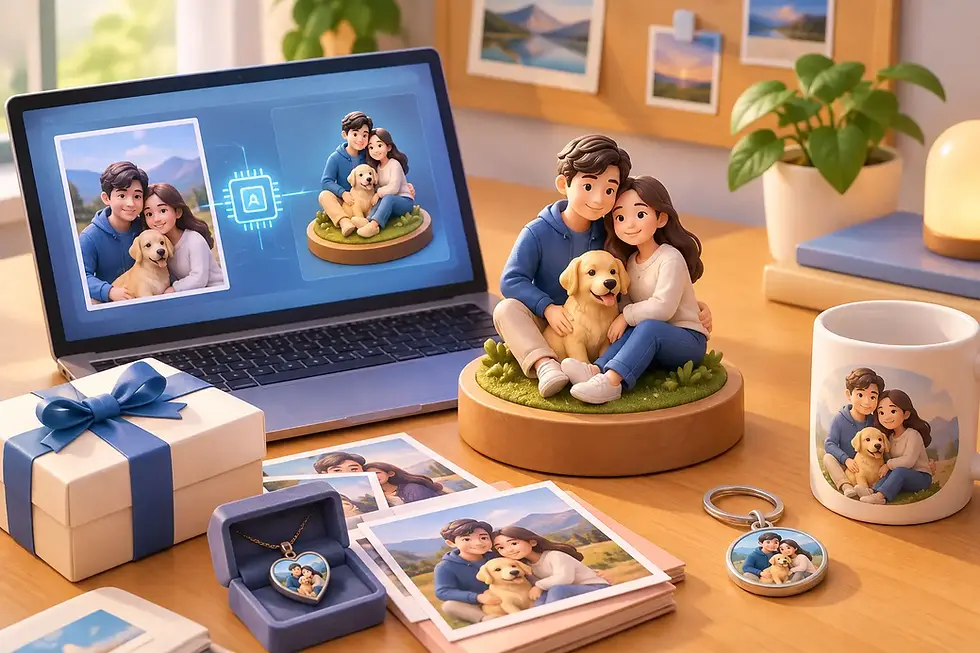
Three-dimensional keepsakes are especially powerful for people who miss the tangible part of companionship: the familiar shape of ears, a curled tail, or the posture that instantly said, “I’m home.” Through AI-assisted visualization and careful hand-finishing, Ours Memories can translate these details into a one-of-one object that feels designed around a real relationship rather than a generic pet image.
Let the Photograph Tell an Honest Story
The best reference photo is not always the sharpest or most polished one. Often, the image that moves you is slightly imperfect because it holds a real moment: a sleepy face after a long walk, a windblown coat on a beach day, or eyes fixed patiently on someone just outside the frame.
If you are commissioning a portrait or sculpture, provide a few images when possible. Include a clear view of the face, a full-body image, and one photo that shows expression or posture. This gives the artist or designer room to understand proportion while also seeing personality. Mention any physical feature that must be accurate, such as one folded ear, a white paw, a tiny spot above the eye, or a distinctive collar.
Avoid feeling pressured to use a photo from your pet’s final days. For many families, the most comforting memorial reflects the vibrant version they remember best. For others, an older pet’s silver muzzle or slower, gentler gaze is exactly what they want honored. Let your emotional response guide that decision.
Add Meaning Without Overfilling the Design
A memorial can hold symbols, but it does not need to explain every chapter of your story. Restraint often creates the most lasting result. One carefully chosen element can carry extraordinary meaning: a favorite ball at their paw, a tiny star, the outline of a familiar park, or a color that reminds you of the blanket they loved.
Names and dates can be beautiful, especially when the piece is intended as a family heirloom. Yet some people prefer only a name or a private phrase, allowing the object to feel less like an ending and more like continued companionship. If you include words, choose language that sounds like you. “Forever loved” may feel right for one family, while another may prefer a nickname, an inside joke, or a simple “Good boy.”
Color also carries memory. Consider the warm cream of a favorite cushion, the green of a trail you walked together, or a calm neutral palette that lets the pet’s likeness remain at the center. There is no need to make a memorial somber. Love can be remembered in joyful color, playful posture, and the gentle humor that made your pet unique.
Create a Place for the Keepsake to Live
The placement of a memorial changes how it supports you. A prominent shelf can be a loving daily greeting. A bedside table can make the piece feel like a private goodnight. A small corner with a photo, candle, or seasonal flower can become a quiet ritual without turning your home into a place of sadness.
If children are grieving too, a visible keepsake may help them understand that remembering is allowed. Invite them to choose one detail for the tribute, such as a color, a favorite activity, or a message. Their contribution does not need to be polished. It simply gives their love a place in the story.
For a pet whose memory belongs to several people, consider how the design will be received by everyone. A shared family memorial may work best with a peaceful pose and timeless details. A personal piece can be more specific, including the private ritual or playful expression that only you fully understood.
Give Yourself Permission to Create Later
Some people begin a memorial immediately because choosing and creating offers a gentle focus after loss. Others need months before they can look at photos without feeling overwhelmed. Both responses are natural. A tribute made on the first anniversary is not less meaningful than one created in the first week.
You may also find that your idea changes as grief softens. At first, you may want a close likeness. Later, you may want a piece that celebrates your pet’s happiest self. Keep the photographs and notes that matter, even if you are not ready to act on them. Memory does not expire, and neither does the opportunity to honor it.
When you do begin, let the process be an act of care rather than a task to complete. Select the image that makes you pause. Keep the detail that makes you smile through tears. Make room for the personality that turned an ordinary routine into a shared life.
A loving memorial does not replace the warm weight of a pet beside you. It can, however, become a small and lasting reminder that the bond was real, that the joy mattered, and that every shared day still has a home in your life.

Comments