


How to Choose a Pet Memorial Gift That Keeps Their Memory Close in Everyday Life
Some goodbyes do not truly end with a farewell.
Perhaps it is the absence of hurried footsteps at the front door. Perhaps it is waking up in the morning and realizing those familiar eyes are no longer waiting to greet you. Choosing a pet memorial gift is not about preserving grief in a single moment. It is about finding a way to hold onto the companionship that once filled your life and transforming it into a source of comfort you can still reach for in the years ahead.
For many people living abroad, a beloved pet may have been a constant companion through the challenges of settling into a new city, moving homes, or navigating life far from family. They witnessed your ordinary days as well as your difficult ones, offering unconditional love without asking for anything in return. The way you remember them does not need to be grand. It simply needs to feel true to who they were and the story you shared together.
A Pet Memorial Gift Is More Than a Photograph
Photographs preserve moments, but a thoughtfully crafted memorial piece can add another layer of connection through form, texture, and presence.
Seeing a pair of upright ears, a familiar head tilt, or a distinctive patch of fur can bring back memories not of loss itself, but of the ways your pet greeted you, waited for you, played beside you, and stayed close through everyday life.
This is what separates a personalized memorial gift from a standard photo frame or generic decoration. Rather than simply reproducing appearance, a custom keepsake seeks to capture personality.
Was your dog known for its cheerful tongue-out grin? Was your cat happiest sitting quietly by the window observing the world? Did they have a slightly drooping ear, a favorite sleeping position, or a habit only family members understood?
These details are often what make remembrance meaningful.
A memorial also doesn't need to be a constant reminder of sadness. Some people place keepsakes on their work desks as though their companion is still quietly keeping them company. Others display them in a living room where family and friends can learn their story. Some prefer a bedside table so each day begins and ends with a familiar presence nearby.
There is no right or wrong place. Only what feels comforting to you.
Begin with Your Story Before Choosing the Design
Before thinking about materials, poses, or styles, ask yourself a simple question:
When you think of your pet, what do you remember first?
Not what they looked like.
But how they made you feel.
If your strongest memory is of them waiting by the door for your return, a seated pose looking upward might feel perfect. If you remember them racing across the grass with ears lifted by the wind, a dynamic pose may capture their spirit better than a formal portrait.
For a senior pet who served as a gentle guardian of the household, softer colors and a calm sitting posture may feel more authentic than an exaggerated playful expression.
A meaningful memorial does not need to contain every memory at once.
Trying to include too many elements can dilute the emotional focus of the piece. Often, choosing one representative moment and building the design around it creates a stronger tribute.
A clear photograph can help recreate physical features, but stories about personality are what transform "looking like them" into truly "feeling like them."
Photos Don't Need to Be Perfect, Just Honest
Many pet owners worry that they only have casual mobile phone photos with poor lighting or cluttered backgrounds.
In reality, a simple photograph that clearly shows the eyes, nose, fur patterns, and body proportions can be more useful than an overly edited image with heavy filters.
Ideally, provide two to four photographs from different angles:
A front-facing image for facial features
A side profile for body shape and outline
One or two candid photos showing natural posture and expression
For black, white, or long-haired pets, some details may not be obvious in photographs. Information about fur length, ear shape, tail position, and unique markings can significantly improve accuracy.
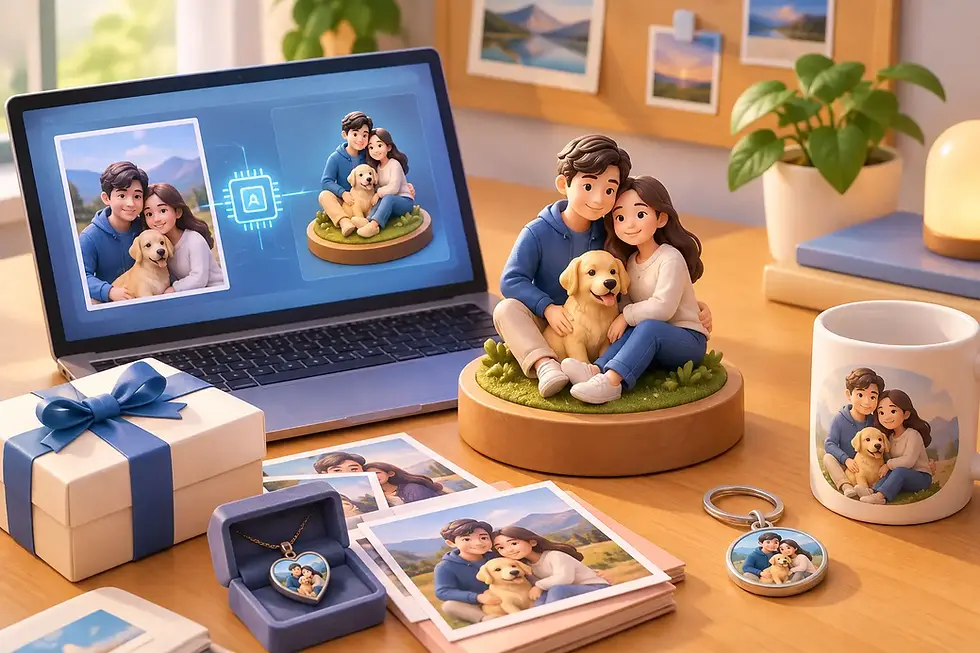
AI-assisted visual design can help organize these references and transform scattered memories into a clearer concept. However, the warmth of a memorial piece ultimately comes from thoughtful adjustments to expression, proportions, and handcrafted details.
Technology helps visualize memories.
Craftsmanship gives those memories lasting form.
Choose Materials and Size Based on the Kind of Presence You Want
A memorial gift is not necessarily more meaningful because it is larger or more detailed.
Instead, consider where it will live and how you want to interact with it.
Smaller desk-sized keepsakes often feel intimate and personal. They provide a quiet reminder during daily routines.
Larger display pieces create a stronger visual presence and may become a meaningful memorial corner within the home.
Materials also influence emotion.
Smooth finishes and rounded forms often feel warm and approachable. Hand-finished textures can create a sense of authenticity and life.
For playful pets, brighter colors may capture their energetic spirit. For modern interiors, more understated tones and minimalist designs may age gracefully over time.
One common mistake is pursuing photo-perfect realism above everything else.
The true value of a memorial piece lies not only in accuracy, but also in whether it captures the spark, personality, and feeling that made your pet unique.
Sometimes a slightly artistic interpretation can feel even more recognizable than strict realism.
Keep Names, Dates, and Personal Objects Meaningful
Adding your pet's name and important dates can be a beautiful choice, but not every memorial needs a complete timeline.
Some people find comfort in including dates that mark a life well lived. Others prefer not to be reminded of loss every time they see the piece.
You might choose to include:
A nickname
A favorite phrase
A personal symbol only your family understands
Likewise, accessories such as collars, toys, bowls, scarves, or favorite balls can become meaningful design elements.
Rather than including everything, it is often better to choose one representative object.
A small blue ball may evoke countless evenings of play.
A familiar bandana may tell a deeper story than a paragraph of text ever could.
When creating a memorial gift for a friend or family member, it is also important to respect their grieving process.
Some people welcome a tribute immediately after loss.
Others may need months before they are emotionally ready.
Instead of surprising them, consider gently asking whether they would like to preserve a memory and inviting them to help choose photographs and personal details.
Sometimes participation itself becomes part of the healing process.
Let Remembrance Become Part of Everyday Life
The best place for a pet memorial is rarely hidden away in storage.
It may sit beside a small lamp near a window. It may share a bookshelf with travel photos and favorite books. It may quietly become part of the home's everyday story. These displays do not need to center on sadness. They simply allow your pet's presence to remain woven into daily life. Some families place flowers beside a memorial on birthdays, adoption anniversaries, or a quiet day each year dedicated to remembrance. This is not about holding onto the past. It is about acknowledging that a life deeply loved deserves to be remembered with equal care.
For children, a physical keepsake can also help explain that loss does not mean forgetting. Love simply continues in a different form.
At Ours memories, we believe remembrance should not lock emotions in the past. Instead, memories can be transformed into lasting three-dimensional keepsakes that allow companionship, gratitude, and love to continue living alongside us.
Whatever form you choose, the most meaningful memorial will preserve not only your pet's unique expression, but also the love reflected in your eyes whenever you think of them.
When longing arrives, there is no need to rush yourself toward letting go.
Simply leave a small place for them.
And let those familiar eyes that once welcomed you home continue, in their own quiet way, to accompany you through many ordinary days to come.

Comments